Looking for outfit ideas? While this guide focuses on finding the perfect fit and colour, check out our Blazer Styling Guide for detailed advice on outfit pairings and layering.
Menswear Essentials
Fetchup Style Edit · Fit, colour, occasion, and how to spend your money wisely
A blazer is the one piece of menswear that gets bought on impulse more than almost anything else — a wedding invite lands, a job interview gets scheduled, and suddenly it’s a rushed store visit with no real plan. That’s usually how men end up with a blazer that’s technically fine and never actually gets worn. Here’s how to pick one that earns its place in the wardrobe instead.
In This Guide
- Types of Blazers
- Which One Suits Your Build
- Colour Guide
- Getting the Size Right
- Occasions
- Price, Quality & Buying
1. Types of Blazers

Not every blazer is built for the same room.
Single-Breasted
One column of buttons, a narrower overlap of fabric in front. This is the default blazer style for a reason — it’s the most versatile, works across body types, and doesn’t demand a particularly formal setting to look right.
Double-Breasted
Two parallel columns of buttons with a wider overlap, giving a bolder, more structured silhouette. It reads more formal and more deliberate than single-breasted, but it needs a leaner build to avoid adding visual bulk.
Structured Blazer
Built with more internal padding and a firmer canvas, holding its shape even off the body. This is the safer choice for formal settings and gives a sharper shoulder line.
Unstructured / Soft Blazer
Little to no padding, made to move and drape more like a heavy shirt than a jacket. Considerably more comfortable for long days and warm climates, and better suited to casual or smart-casual settings than boardrooms.
Bandhgala / Nehru Jacket
A closed-collar, buttoned-up style rooted in Indian tailoring, now a genuine alternative to a Western blazer for weddings and festive events — often worn without a shirt collar showing, which changes how it should be fitted through the neck.
2. Which One Suits Your Build

The blazer style matters less here than the cut and padding — the same jacket in two different builds can look completely different.
Slim or lean builds can carry structured blazers and double-breasted cuts well, since there’s less bulk for the extra fabric and padding to fight against.
Broad or Athletic Build
Single-breasted, softer-shouldered blazers avoid adding unnecessary width to an already broad frame. Heavily padded shoulders on a naturally broad build tend to look exaggerated rather than sharp.
Shorter Height
A shorter blazer length — sitting closer to the hip than mid-thigh — and a higher button stance both help elongate the leg line visually. Long, boxy blazers tend to overwhelm a shorter frame.
Taller Build
Taller men can comfortably wear slightly longer blazers and bolder patterns without them reading as oversized, and generally have more room to experiment with double-breasted cuts.
Heavier Build
A single-breasted blazer with moderate structure, darker solid colours, and a slightly longer length (to avoid the hem flaring outward) tends to sit better than tightly fitted or heavily patterned options.
3. Colour Guide
- Navy
- Charcoal
- Black
- Beige/Tan
- Tweed Brown
Navy is the single most useful blazer colour a man can own — formal enough for interviors and weddings, relaxed enough for a smart-casual dinner, and it pairs with nearly every trouser colour without a second thought.
Charcoal grey is the closest formal rival to navy, slightly more serious in tone, and the safer pick for very formal or corporate events.
Black reads the most formal of all but is also the least versatile day-to-day — it edges toward funeral or strict black-tie territory if worn too often outside those settings.
Beige and tan are built for daytime and warm-weather events — think garden weddings or beach-adjacent functions — and look distinctly out of place after dark or in a boardroom.
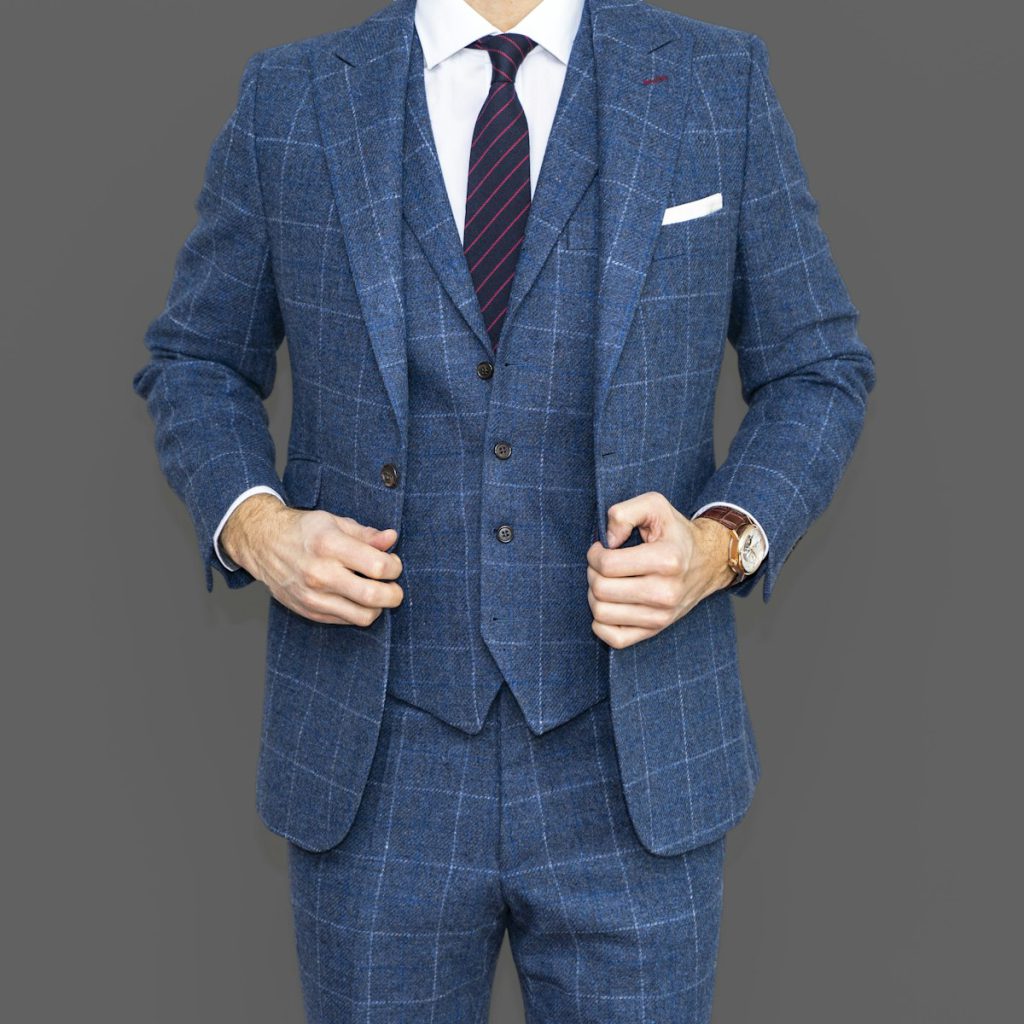
Tweed and patterned blazers (checks, herringbone) work best for casual or semi-formal daytime occasions, and are the easiest way to add personality without needing bold accessories.
4. Getting the Size Right

Off-the-rack rarely fits perfectly — a tailor closes that last gap.
Practical Blazer Fit Checklist:
- Shoulder Seams: Should sit exactly at the edge of your shoulder bone, not beyond it — this is the one thing a tailor genuinely cannot fix later.
- Sleeve Length: Should end right at the wrist bone, showing about half an inch of shirt cuff underneath.
- Jacket Length: The blazer should cover your seat and your fingertips should fall roughly level with the hem when your arms hang naturally at your sides.
- Button Stance: The top button of a two-button blazer should sit at or slightly above your natural waist. The chest should allow a closed fist of room when buttoned.
- Construction Quality: Pinch the chest fabric and lapel — if it feels stiff and glued rather than soft and layered, it’s likely fused construction. Full-canvas or half-canvas is preferred.
Worth doing: Buy for your shoulders and chest first, then get the waist, sleeves, and length altered by a tailor. Almost everything else on a blazer can be adjusted — the shoulder line can’t.
5. Occasions

Office

Wedding

Casual weekend
Office
For interviews and formal office settings, opt for a structured, single-breasted blazer in navy or charcoal. Pair with tailored trousers and a crisp white shirt. It draws attention to your professionalism without being distracting.
Weddings
Weddings and festive functions are where a bandhgala or a patterned, slightly bolder blazer earns its place. A tweed or linen blend works great for daytime events to show off detailing in natural light.
Casual Wear
For casual weekend events, an unstructured blazer in a lighter fabric — like a cotton-blend — over a plain tee or polo keeps things relaxed but sharp. Pair with dark denim or chinos.
Warm Climates
In hot and humid weather, a linen or unlined hopsack blazer is your best friend. Choose lighter colors like beige or tan to reflect heat, and ensure it has minimal padding for maximum breathability.
“A blazer that fits well in a plain colour will always outperform a trendy one that doesn’t.”
6. Price, Quality & Buying Right
Blazer pricing spans a genuinely wide range, and the jump in quality isn’t always where people expect it to be. Here’s roughly how the tiers break down for the Indian market.
| Tier | Range | Description |
|---|---|---|
| Budget | ₹2,000 – ₹5,000 | Polyester or poly-cotton blends, fused (glued) construction. Fine for occasional wear, but loses shape faster and doesn’t breathe well. |
| Mid-Range | ₹6,000 – ₹15,000 | Wool blends, half-canvas construction. The best value zone for most men — noticeably better drape and durability than budget options. |
| Premium | ₹15,000+ | Full wool, full-canvas construction, often tailored or made-to-measure. Worth it if you’ll genuinely wear it often over several years. |
What “Canvas” Actually Means
A fused blazer glues the internal structure to the outer fabric — cheaper to produce, but it can bubble or separate over time, especially after dry cleaning. A half-canvas blazer stitches the canvas in through the chest while fusing the rest, offering a solid middle ground. Full-canvas construction stitches the entire structure by hand, moving and draping naturally with your body — it’s the mark of genuinely good tailoring, and the main reason premium blazers cost what they do.
Quick Quality Checks
Pinch the chest fabric and lapel — if it feels stiff and glued rather than soft and layered, it’s likely fused construction. Check the buttonholes: hand-finished ones look slightly imperfect and textured, while machine ones look uniformly clean. And always check the fabric composition tag — anything above 70% polyester will breathe poorly and hold heat, which matters a lot more in Indian weather than it does elsewhere.
Tags: Men’s Blazer | Menswear Guide | Men’s Fashion | Wardrobe Essentials | Fetchup Style Edit