The Definitive Guide: How to Fade Acne Dark Spots and Repair the Barrier
By FetchUp • 8 min read • Evidence-Informed Guide
Few skincare grievances persist with the obstinance of post-acne pigmentation. You endure the swelling, tenderness, and inflammation of a breakout, only to be left with a lingering, discolored shadow long after the blemish resolves. Medically termed Post-Inflammatory Hyperpigmentation (PIH), these recalcitrant marks can endure for months if approached haphazardly.
Understanding how to fade acne dark spots requires dissecting the cascade of cellular injury beneath the epidermis. True recovery demands more than just throwing high-strength acids at your skin; it necessitates an exacting calibration of anti-inflammatory tyrosinase inhibitors, gentle cell-turnover accelerants, and non-negotiable photoprotection.
01
The Pathology: Why Acne Leaves a Shadow
When an acne lesion erupts, whether as an inflammatory papule or a deeper cyst, the cutaneous tissue recognizes the rupture as physical trauma. In response, a cascade of inflammatory mediators—including cytokines, prostaglandins, and leukotrienes—surges through the dermis and epidermis. These chemical signaling agents prompt your epidermal melanocytes to ramp up melanin synthesis dramatically.
As the skin attempts to heal the localized wound, this surplus melanin is deposited within adjacent keratinocytes or engulfed by dermal macrophages (melanophages). When trapped deep inside macrophages in the dermis, the discoloration can appear greyish-slate and take significantly longer to clear than superficial epidermal marks.
This distinct biological mechanism differentiates PIH from atrophic or hypertrophic acne scars. True scarring represents a permanent compromise in structural collagen fibers—resulting in textural indentations or raised tissue.
PIH, by contrast, is purely a pigmentary imbalance. Because the cellular architecture remains intact, post-inflammatory marks can be completely resolved with strategic biochemical intervention and time.
02
Barrier Defense: Non-Negotiable Rules to Stop Darkening
The cardinal sin of acne recovery is aggravating an already compromised barrier. Physical manipulation—namely picking, scratching, or popping pimples—ruptures the follicular wall and drives purulent debris deeper into the surrounding tissue. This multiplies the localized inflammatory response exponentially, guaranteeing that a routine blemish evolves into a stubborn, deep-seated dark spot.
Equally damaging are aggressive physical scrubs and coarse mechanical exfoliants. Walnut shells, rough cleansing brushes, and abrasive beads create micro-tears across the stratum corneum, inciting fresh low-grade inflammation that signals melanocytes to keep pumping out pigment.
💡
Dermatologist Rule: The 11:00 AM – 3:00 PM Window
Ultraviolet (UV) radiation is the primary fuel for melanogenesis. Melanin exists physiologically to shield cellular nuclei from DNA damage. When unshaded skin meets peak solar radiation, tyrosinase enzymes accelerate pigment synthesis within preexisting marks. Strict avoidance of direct peak sunlight, paired with broad-spectrum SPF 50+, is mandatory.
Sun protection cannot be considered an optional step in a hyperpigmentation regimen; it is the cornerstone. Daily application of high-factor sunscreen prevents UV-induced photo-oxidation of pigment, allowing therapeutic actives to clear deposits without constant reinforcement from the sun.
✦
03
The Power Duo: Azelaic Acid & Adapalene
When treating patients who present with active pustules alongside persistent dark spots, dermatologists turn to a proven multi-modal combination: azelaic acid paired with adapalene. This dual pathway addresses microbial colonization and cellular proliferation concurrently.
Azelaic acid, a dicarboxylic acid naturally derived from grains, acts as a selective tyrosinase inhibitor. Crucially, it specifically targets hyperactive, abnormal melanocytes while leaving surrounding normal skin tones unaffected. Moreover, its anti-inflammatory and antibacterial properties calm active swelling and reduce Cutibacterium acnes counts.
“Azelaic acid provides a rare clinical advantage: it normalizes melanogenesis without bleaching baseline cutaneous pigment, making it safe across all Fitzpatrick skin types.”
— Clinical Dermatology Guidelines
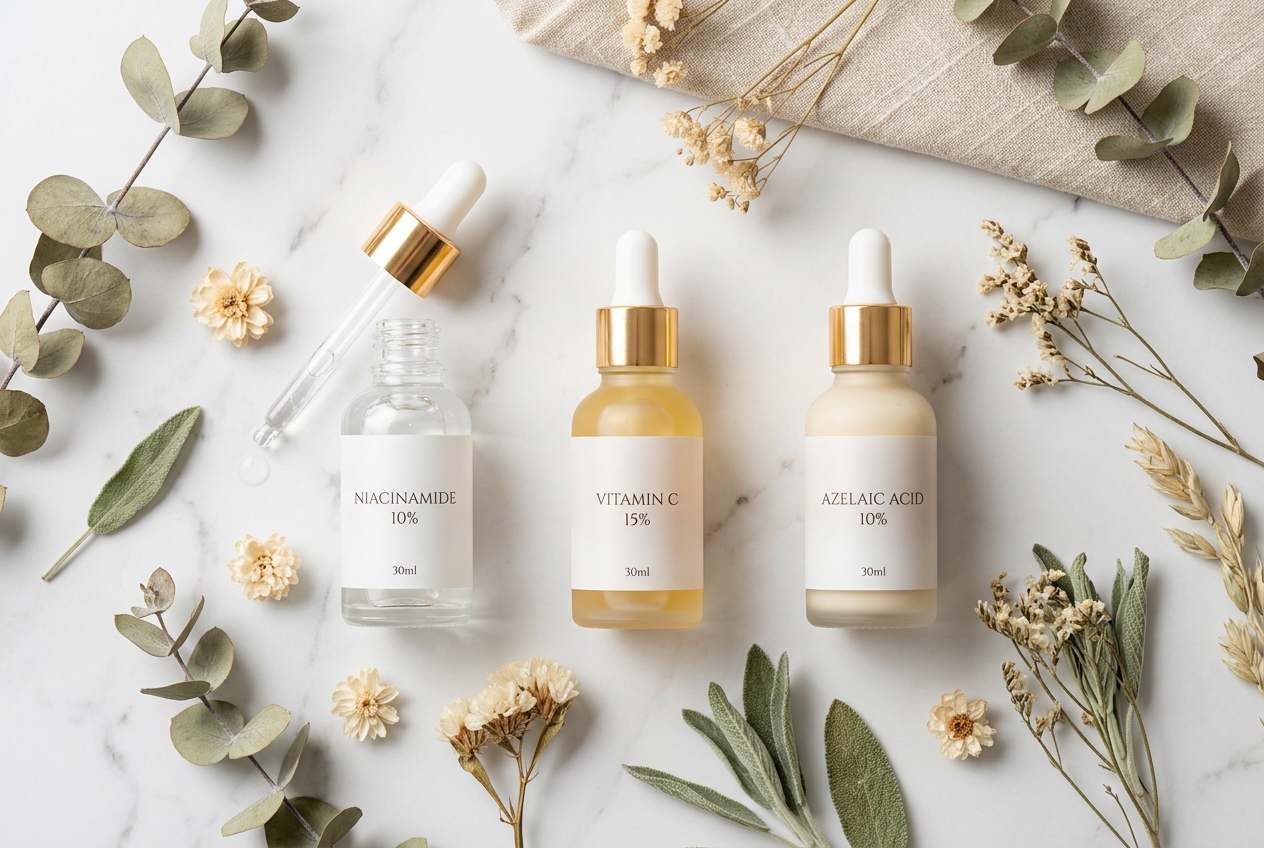
Pairing morning applications of 10% to 15% azelaic acid with evening use of 0.1% adapalene (a third-generation topical retinoid) speeds cellular turnover. Adapalene works on retinoic acid receptors to normalize follicular desquamation, clearing the clogged pore and bringing pigment-laden keratinocytes to the surface for gentle shedding.
Once breakouts are completely controlled, your clinical focus shifts toward breaking down existing pigment pools. This stage requires a symphony of targeted tyrosinase inhibitors and alpha-hydroxy acids (AHAs) that intercept melanin synthesis at multiple points.
Alpha Arbutin & Kojic Acid: Arbutin, a naturally occurring glucoside of hydroquinone, provides a stable, slow-release inhibition of tyrosinase without the cytotoxicity of synthetic hydroquinone. Kojic acid, a by-product of fungal fermentation, chelate the copper ions required for tyrosinase activity, depriving the enzyme of the catalyst it needs to synthesize pigment.
Niacinamide & Glycolic Acid: While arbutin stops pigment production, 2% to 5% niacinamide halts the transfer of melanosomes from melanocytes into surrounding skin cells. Complementing this, glycolic acid loosens the intercellular glue binding dead, pigment-laden cells in the stratum corneum, polishing the skin’s surface and accelerating the visual clearing of marks.
05
Skin-Type Matching: Customizing Your Actives
No single hyperpigmentation regimen functions universally across every skin type. Prescribing identical concentrations to barrier-impaired sensitive skin and resilient, sebum-rich skin will invariably trigger either severe irritation or lackluster progress.
Dry & Dehydrated Skin: Focus on hydrators paired with gentle lighteners. Combine Alpha Arbutin (2%) within hyaluronic acid vehicles, cushioned by barrier-replenishing ceramides to ensure the acid doesn’t provoke trans-epidermal water loss.
Oily & Congestion-Prone Skin: Adapalene 0.1% or encapsulated retinol remains the gold standard. These regulate lipid production within the sebaceous units while accelerating epidermal cell turnover. Apply in a pea-sized amount over a dry face, pressing gently without aggressive friction.
Sensitive & Reactive Skin: Highly concentrated multi-acid cocktails frequently trigger secondary PIH in reactive complexions. Instead, opt for stabilized 5% to 8% glycolic acid or polyhydroxy acids (PHAs) formulated in nourishing bases, building tolerance before introducing supplementary lighteners.
06
Clinical Procedures: When At-Home Care Stalls
While disciplined topical care resolves the majority of epidermal marks over a six-to-eight-week timeline, deeper dermal deposits often require professional intervention. For individuals seeking accelerated resolution, medical dermatologists utilize controlled energy devices and in-office chemical resurfacing.
Clinical interventions must always be administered by certified dermatology professionals to avoid rebound post-inflammatory burns.
Superficial Chemical Peels: Serial peels utilizing 20% to 30% salicylic acid or Jessner’s solutions dissolve desmosomes uniformly, purging oxidized epidermal layers without inducing the severe heat that triggers melanocyte rebound.
Q-Switched Nd:YAG Lasers (1064 nm): For refractory dermal hyperpigmentation—particularly across melanin-rich complexions (Fitzpatrick IV–VI)—the 1064 nm Q-switched Nd:YAG laser is an exceptional tool. Its ultra-short nanosecond pulse breaks up deep pigment pockets photoacoustically rather than photothermally, clearing dermal melanophages while safeguarding the epidermal barrier.
07
The Protocol: Your Daily Morning & Night Blueprint
Consistent use of targeted actives, barrier repair, and diligent sun protection can achieve visibly clearer, more even skin tone within 8-12 weeks.
Consistency and strategic layering dictate success. Overloading multiple potent actives in a single session weakens the moisture barrier, creating micro-inflammation that worsens dark marks. Follow this structured daily blueprint to achieve a clear, uniform complexion safely.
🧪
The Golden Layering Rule
Always move from thinnest to thickest viscosity: watery serums first, followed by active emulsions, then barrier creams, and finally SPF in the morning. Allow each layer 60 seconds to settle before applying the next.
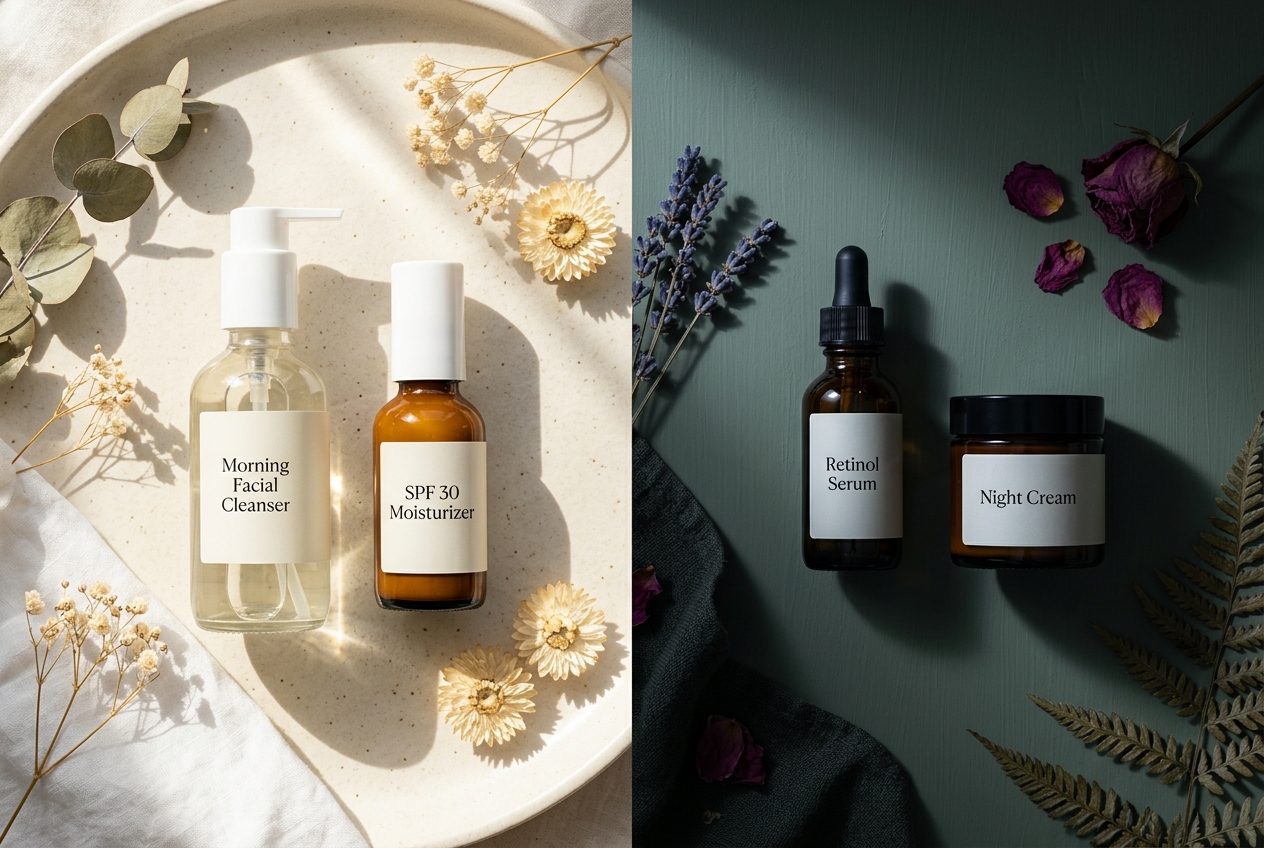
Morning Routine: Wash with a non-foaming hydrating cleanser. Apply 10% azelaic acid or a 2% alpha arbutin serum across slightly damp skin. Follow with a lightweight, ceramide-rich moisturizer. Finish with two finger-lengths of broad-spectrum SPF 50+ sunscreen, re-applying if outdoors during peak hours.
Evening Routine: Double cleanse with an oil-based balm followed by a gentle gel cleanser. On dry skin, apply a pea-sized amount of adapalene 0.1% or your preferred retinoid. Follow with a soothing peptide or niacinamide night cream to reinforce the barrier during nocturnal cellular repair.
Curated Clinical Arsenal
Targeted Formulations for Post-Acne Marks
Evidence-based actives selected for stability, non-comedogenic profiles, and clinically verified tyrosinase inhibition.
Tyrosinase Inhibitor
Azelaic Acid 10% Suspension
Multi-functional brightening cream targeting active breakouts while fading stubborn post-inflammatory red and dark spots.
Look for fragrance-free, dermatologist-tested OTC formulations at pharmacies.
Cell Turnover
Adapalene 0.1% Acne Gel
Prescription-strength OTC retinoid that normalizes epidermal turnover, unclogs pores, and speeds up pigment shedding.
Look for fragrance-free, dermatologist-tested OTC formulations at pharmacies.
Hydration & Spot Care
Alpha Arbutin 2% + HA
Safe, bio-compatible tyrosinase inhibitor suspended in multi-molecular hyaluronic acid to protect moisture while lifting dark spots.
Look for fragrance-free, dermatologist-tested OTC formulations at pharmacies.
Broad-Spectrum SPF
Tinted Mineral SPF 50+
Zinc oxide based sunscreen enriched with iron oxides to shield against both UV rays and visible light-induced hyperpigmentation.
Look for fragrance-free, dermatologist-tested OTC formulations at pharmacies.
Affiliate Disclosure: Some links on this page are affiliate links. If you purchase through them, we may earn a small commission at no extra cost to you. We only recommend clinical formulations grounded in dermatological research.
Core Prevention Rule: Never pick, pop, or squeeze active breakouts—forcing inflammation deeper into the dermis widens melanin dispersion and converts temporary marks into pitted scars. For persistent or cystic hyperpigmentation, consult a board-certified dermatologist.