
Editorial Notice: This analysis synthesizes official technical disclosures from Apple’s Newsroom and Apple India product documentation. Hardware claims, battery metrics, and performance characteristics reflect official manufacturer specifications. Indian retail availability begins November 9, 2026.
For more than a decade, Apple staunchly defended a philosophical boundary between the iPad and the Mac: the tablet was built for direct manipulation, while the laptop reigned supreme for indirect cursor precision. With the unveiling of the 2026 MacBook Pro with PROLED XDR Display, that long-standing division has officially evolved. By integrating responsive multi-touch capability directly into a groundbreaking tandem OLED screen—while preserving the precision of the Magic Keyboard, Force Touch trackpad, and macOS cursor—Apple has delivered its most versatile pro notebook yet. Combined with the sheer computational power of the next-generation M5 Pro and M5 Max Apple Silicon chips, the new MacBook Pro redefines high-end portable computing for creatives, developers, and power users alike.
What’s New in the 2026 MacBook Pro?

The 2026 MacBook Pro brings touchscreen interactivity, tandem OLED visuals, and next-generation M5 silicon to professional workflows.
The 2026 refresh represents the most radical architectural leap for the MacBook Pro since Apple Silicon debuted in late 2020. Rather than delivering an iterative specification bump, Apple re-engineered the notebook from the panel up. The flagship innovations include:
- Capacitive Multi-Touch Integration: Native direct-touch support woven smoothly into macOS, enabling dual-mode operation alongside traditional trackpad and keyboard controls.
- PROLED XDR Tandem OLED Display: A revolutionary panel using two stacked emission layers to achieve true per-pixel blacks, exceptional contrast, and blinding peak brightness without OLED burn-in vulnerabilities.
- M5 Pro & M5 Max Silicon: Advanced 2-nanometer architecture delivering heightened unified memory bandwidth, expanded GPU clusters, and dedicated neural compute hardware for local AI models.
- Dynamic Island Migration: Replacing the static display notch, the Dynamic Island adapts contextually to system alerts, Live Activities, background rendering progress, and audio controls.
- Lighter, Slimmer Chassis: Structural titanium-aluminum alloy framing that shaves approximately 0.4 to 0.6 pounds off previous-generation bodies.
- Unprecedented Endurance: Apple specifies up to 24 hours of video playback on 16-inch configurations—the longest rated battery life in Mac history.
PROLED XDR: Tandem OLED Technology Explained

Tandem OLED pairs two emissive layers to eliminate mini-LED backlight blooming while achieving 2,000 nits peak HDR brightness.
Previous MacBook Pro iterations utilized Liquid Retina XDR displays backed by thousands of mini-LED local dimming zones. While mini-LED delivered remarkable luminance, it suffered from subtle “blooming” or haloing around bright objects against pure black backgrounds (such as subtitles or editing cursors). The new PROLED XDR display eliminates this compromise entirely.
At the heart of the PROLED XDR screen lies Tandem OLED architecture. Instead of driving a single organic light-emitting diode layer to extreme voltage thresholds (which accelerates degradation and thermal throttling), Apple stacks two distinct OLED layers in series. The combined light output doubles photon emission while distributing heat and electrical strain evenly across both sub-pixel layers.
Key Display Specifications at a Glance
- Peak HDR Brightness: Up to 2,000 nits for specular highlights in Dolby Vision / HDR10 content, with 1,000 nits sustained full-screen brightness for outdoor daylight visibility.
- Contrast Ratio: A staggering 10,000,000:1. Because individual pixels switch off completely, true blacks produce absolute zero-nit luminance.
- ProMotion Adaptive Refresh Rate: Dynamically adjusts from 10Hz to 120Hz based on viewport movement, preserving battery during static reading and delivering fluid response when drawing or scrolling.
- Color Gamut Mastery: Full 100% coverage of the DCI-P3 wide color space and advanced support for Adobe RGB workflows, crucial for print and fashion photography.
- Nano-Texture Glass Option: An optional etched nano-texture glass coating that scatters ambient light without muddying contrast or introducing grain, making glare non-existent in bright studio or outdoor environments.
For professional colorists and video editors, pixel-level dimming eliminates the artificial clipping of dark shadow details common on conventional edge-lit or mini-LED panels. What you master on screen is precisely what renders on high-end cinema mastering monitors.
Touchscreen: Evolving the macOS Workflow

Direct touch complements rather than replaces the keyboard and trackpad, opening fluid multi-touch workflows in creative software.
For years, critics questioned how macOS—with its menu bars, close boxes, and compact window targets designed for a 1-pixel pointer—could accommodate direct finger touch. Apple solved this not by dumbing down macOS into a mobile operating system, but by implementing adaptive touch intent.
Touch on the new MacBook Pro is conceived as a parallel accelerator. The Magic Keyboard and Force Touch trackpad remain the primary instruments for dense text entry, coding, and pixel-precise vector manipulation. Touch steps in during moments of natural physical instinct:
- Fluid Document Navigation: Effortlessly flicking through multi-page PDF scripts, pinching to inspect 45-megapixel camera raw files, or scrubbing video timelines with your thumb while keeping hands positioned on the deck.
- Creative & Audio Mixing Surfaces: In digital audio workstations (DAWs) like Logic Pro, audio engineers can physically manipulate multiple virtual channel faders simultaneously using multiple fingers—a task impossible with a single cursor.
- Annotation & Markup: Rapidly signing documents, sketching wireframe concepts, or circling revisions directly on PDF proofs without reaching for an external graphics tablet.
- Native iOS & iPadOS App Testing: For developers running universal iOS/iPadOS applications directly on macOS, touch provides 1:1 hardware simulation for multi-finger gestures, swipes, and canvas manipulations without compiling to a physical test device.
To prevent smudges from ruining the PROLED XDR visual clarity, Apple incorporates an advanced oleophobic and hydrophobic fluorine coating that resists fingerprint oils and wipes clean effortlessly with a microfiber cloth.
Apple has not turned macOS into a tablet UI. Touch targets dynamically expand when your finger approaches the screen, but shrink back to crisp desktop proportions the instant you touch the trackpad. It feels organic, not forced.
M5 Pro vs. M5 Max: Next-Gen Silicon Breakdown

Built on second-generation 2nm architecture, M5 Pro and M5 Max bring massive bandwidth jumps for local AI and rendering.
Powering the 2026 MacBook Pro are Apple’s most formidable System-on-Chip (SoC) architectures to date: the M5 Pro and M5 Max. Fabricated using cutting-edge 2-nanometer process technology, these chips optimize the performance-per-watt curve that keeps the MacBook Pro whisper-quiet under intense compilation or export loops.
| Architecture Feature | Apple M5 Pro | Apple M5 Max |
|---|---|---|
| Target Workloads | Full-stack development, 4K multi-cam editing, audio engineering, scientific modeling. | 8K RAW grading, 3D Octane/Cinema 4D rendering, large-scale local LLM fine-tuning. |
| CPU Configuration | Up to 14 CPU cores (10 Performance + 4 Efficiency cores). | Up to 16 CPU cores (12 Performance + 4 Efficiency cores). |
| GPU Clusters | Up to 20-core GPU with hardware-accelerated ray tracing gen 2. | Up to 40-core GPU with dedicated neural shading pipelines. |
| Memory Bandwidth | Over 300 GB/s unified memory throughput. | Over 600 GB/s unified memory throughput. |
| Max Unified Memory | Up to 64GB Unified Memory. | Up to 128GB Unified Memory. |
| External Displays | Up to two high-resolution 6K 60Hz displays. | Up to four external high-resolution displays simultaneously. |
For on-device generative AI, both chips introduce an enhanced 32-core Neural Engine paired with dedicated matrix math accelerators integrated directly into the GPU cores. This allows AI practitioners to run 30-billion-parameter open-source LLMs locally entirely within unified RAM without communicating with external cloud servers.
Design, Portability, and Dynamic Island

A re-engineered internal cooling loop and alloy framing deliver a noticeably lighter chassis with slimmer bezels.
Since the 2021 redesign, the MacBook Pro was widely praised for its port selection, but critiqued for its dense, boxy weight. In this generation, Apple addressed portability directly through a comprehensive structural overhaul:
- Featherweight Pro Chassis: The 14-inch model now weighs approximately 3.0 pounds (~1.36 kg) (down from ~3.5 lbs), while the 16-inch model drops to approximately 4.0 pounds (~1.81 kg) (down from ~4.7 lbs). In backpacks and briefcases, the difference is immediately noticeable.
- Thinner Display Borders: Bezel thickness surrounding the active OLED matrix has been trimmed by roughly 25%, granting a nearly edge-to-edge floating canvas.
- Dynamic Island Arrives on the Mac: The fixed camera notch has been replaced by the interactive Dynamic Island. It houses an upgraded 1080p FaceTime HD camera with Center Stage while morphing into a functional HUD for AirDrop transfers, countdown timers, background audio rendering, and screen-recording indicators.
- Uncompromised Pro Connectivity: Unlike the minimalist MacBook Air, the Pro retains all mission-critical interfaces: three Thunderbolt 5 / USB-C ports, a full-sized SDXC UHS-II card slot, an HDMI 2.1 port capable of 8K 60Hz or 4K 240Hz, a 3.5mm high-impedance headphone jack, and MagSafe 3 high-speed charging.
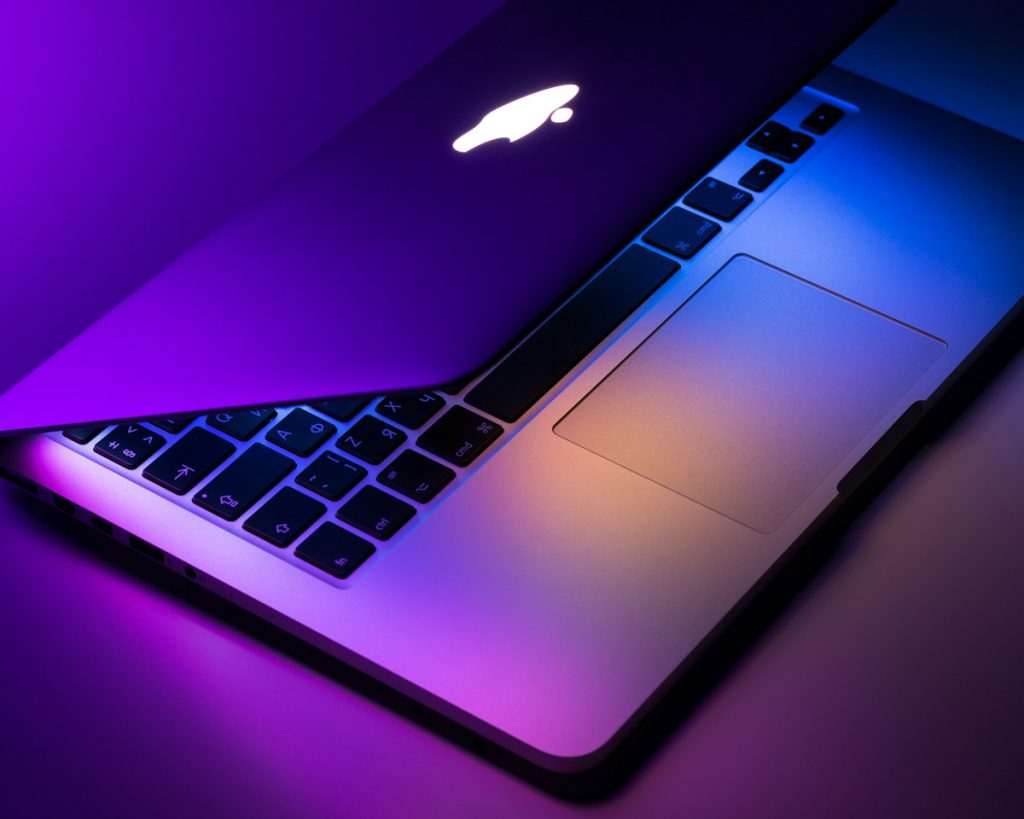
- Debunking the Illuminated Logo: Pre-launch supply chain speculation claimed Apple might revive the retro glowing white Apple lid logo. Official hardware specifications confirm that Apple retained the elegant, precision-milled matte mirror logo; no illuminated lid feature is present on production units.
India Pricing, Configurations & Availability
Positioned squarely at the pinnacle of enterprise and creative computing, the 2026 MacBook Pro reflects pro-tier pricing across Apple India’s official retail network. Official orders open immediately, with deliveries and store availability beginning November 9, 2026 across Apple BKC (Mumbai), Apple Saket (Delhi), and authorized Apple Premium Resellers nationwide.
| Model & Display Size | Processor Tier | Official India Starting Price | Availability Date |
|---|---|---|---|
| 14-inch MacBook Pro | Apple M5 Pro | ₹3,49,900 | November 9, 2026 |
| 16-inch MacBook Pro | Apple M5 Pro | ₹4,09,900 | November 9, 2026 |
| 14-inch MacBook Pro | Apple M5 Max | ₹5,49,900 | November 9, 2026 |
| 16-inch MacBook Pro | Apple M5 Max | ₹5,89,900 | November 9, 2026 |
Important Buying Notes: The figures above denote standard consumer starting configurations. Final prices scale upward when customizing unified memory (up to 128GB) or solid-state storage (up to 8TB). Eligible university students, parents buying for students, and academic educators can unlock Apple Education Pricing through UNiDAYS verification for approximate 8% to 10% savings alongside seasonal trade-in credits.
Buyer’s Guide: Who Should Consider Buying?

A deliberate balance of cost vs. tangible workflow efficiency determines whether the M5 generation makes financial sense for you.
At an entry price starting well over three lakh rupees, the 2026 MacBook Pro is a serious capital expenditure. It is engineered primarily as a professional tool designed to amortize its cost through saved billable hours:
Who Gets Maximum Value:
- Colorists & Film Editors: The tandem OLED PROLED XDR screen serves as a portable reference grading monitor, eliminating the need to haul external broadcast displays on location.
- Audio Engineers & Music Producers: Direct multi-touch control of DAW faders, automation curves, and soft-synth parameters radically improves live and studio tracking efficiency.
- AI Engineers & 3D Animators: The M5 Max with 128GB of high-speed unified RAM permits local execution of large AI models and real-time Octane viewport navigation while mobile.
- Owners of Intel or Early M1 Pro/Max Laptops: Upgrading from an Intel or M1 model yields a 3x to 5x compute leap, coupled with dramatic battery life and display improvements.
Who Should Skip or Hold Off:
- Current M3 Pro or M4 Pro Owners: If your compilation times and render queues already execute smoothly, the jump in CPU performance alone does not justify the steep upgrade premium unless the touchscreen or OLED display solves a specific pain point.
- General Productivity & Office Users: For email, web browsing, spreadsheets, and casual creative work, the MacBook Air remains the far superior economic choice at a third of the price.
- Desktop-Bound Workstations: If your laptop stays closed in clamshell mode connected to external monitors all day, you cannot benefit from the PROLED XDR display, Dynamic Island, or touchscreen functionality.
Powering a high-end mobile workstation requires a smart desk setup. Read our blueprint on How to Build Your Dream Smart Home Workstation in India for cable management, smart lighting, and ergonomics.
Frequently Asked Questions (FAQ)
1. Is the new MacBook Pro touchscreen?
Yes. The 2026 MacBook Pro introduces capacitive multi-touch directly into the PROLED XDR screen, supporting gestures, scrolling, drawing, and direct manipulation alongside the keyboard and trackpad.
2. What is the PROLED XDR display?
PROLED XDR is Apple’s tandem OLED display technology. It stacks two organic emission layers to deliver true 10,000,000:1 contrast ratio blacks, up to 2,000 nits peak HDR brightness, ProMotion 120Hz refresh rates, and zero mini-LED haloing.
3. What are the India prices?
Starting prices in India are ₹3,49,900 for the 14-inch M5 Pro, ₹4,09,900 for the 16-inch M5 Pro, ₹5,49,900 for the 14-inch M5 Max, and ₹5,89,900 for the 16-inch M5 Max.
4. What is the difference between M5 Pro and M5 Max?
The M5 Pro features up to 14 CPU cores, a 20-core GPU, and 300+ GB/s memory bandwidth for coding and video. The M5 Max scales up to 16 CPU cores, a 40-core GPU, 600+ GB/s bandwidth, and 128GB RAM for heavy 3D rendering and local AI.
5. When will it be available in India?
Official retail availability and shipments in India begin November 9, 2026, through the Apple Store Online, Apple BKC, Apple Saket, and authorized resellers.
6. Does the touchscreen replace the trackpad?
No. The touchscreen complements rather than replaces the Force Touch trackpad. Keyboard and trackpad remain the primary interfaces for text and precise cursor control, while touch accelerates scrubbing, gestures, and creative controls.
7. Who should consider upgrading?
Creative professionals (video editors, colorists, 3D animators, audio engineers) and users upgrading from Intel or M1-generation Macs will experience monumental workflow benefits. Users on M3 or M4 laptops can comfortably wait.
Balanced Verdict & Pro Workstation Essentials
The 2026 MacBook Pro is a masterclass in professional hardware engineering. By delivering a reference-grade PROLED XDR tandem OLED screen, trimming unnecessary chassis bulk, and embracing multi-touch without compromising desktop macOS ergonomics, Apple has created the ultimate mobile creative workstation.
To complement your high-end portable computing setup, consider these verified workstation essentials:
Cable Management Organizer Box
Keep your 140W MagSafe charger, power strips, and Thunderbolt cables concealed for a minimalist, distraction-free pro workstation.
Verified Store Recommendation
Honeywell Multi-Port USB-C / Thunderbolt Dock
Expand your MacBook Pro with high-speed Ethernet, 4K/6K external display outputs, multiple USB high-speed ports, and Power Delivery over a single cable.
Verified Store Recommendation
SanDisk Portable External SSD (2TB)
Rugged portable storage with drop protection and USB-C connectivity, ideal for editing high-resolution video and offloading creative projects.
Verified Store Recommendation
Tomtoc 360 Protective Laptop Sleeve
CornerArmor military-grade protection and soft fleece lining designed to safeguard the PROLED XDR display and chassis against travel impacts.
Verified Store Recommendation
Affiliate Transparency: When you purchase items through links on FetchUp, we may earn an affiliate commission from qualifying purchases on Amazon India at no additional cost to you. We exclusively recommend products aligned with our editorial standards.
Official Sources & Related Reading: Hardware disclosures and regional India availability can be verified directly via Apple India — MacBook Pro and Apple Newsroom. Related on FetchUp: Beyond the Chatbot: Why the Future of AI is Autonomous Action.