
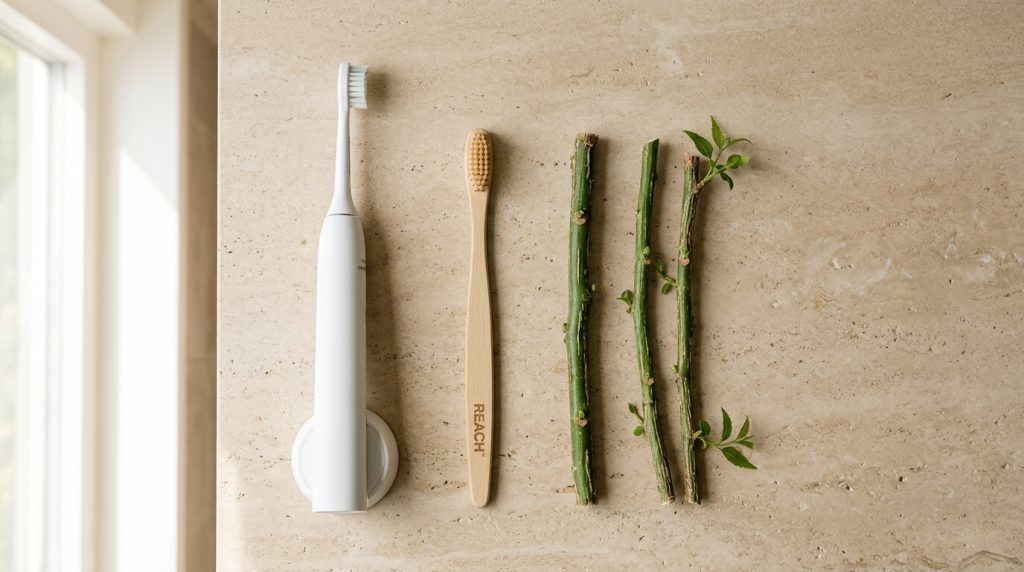
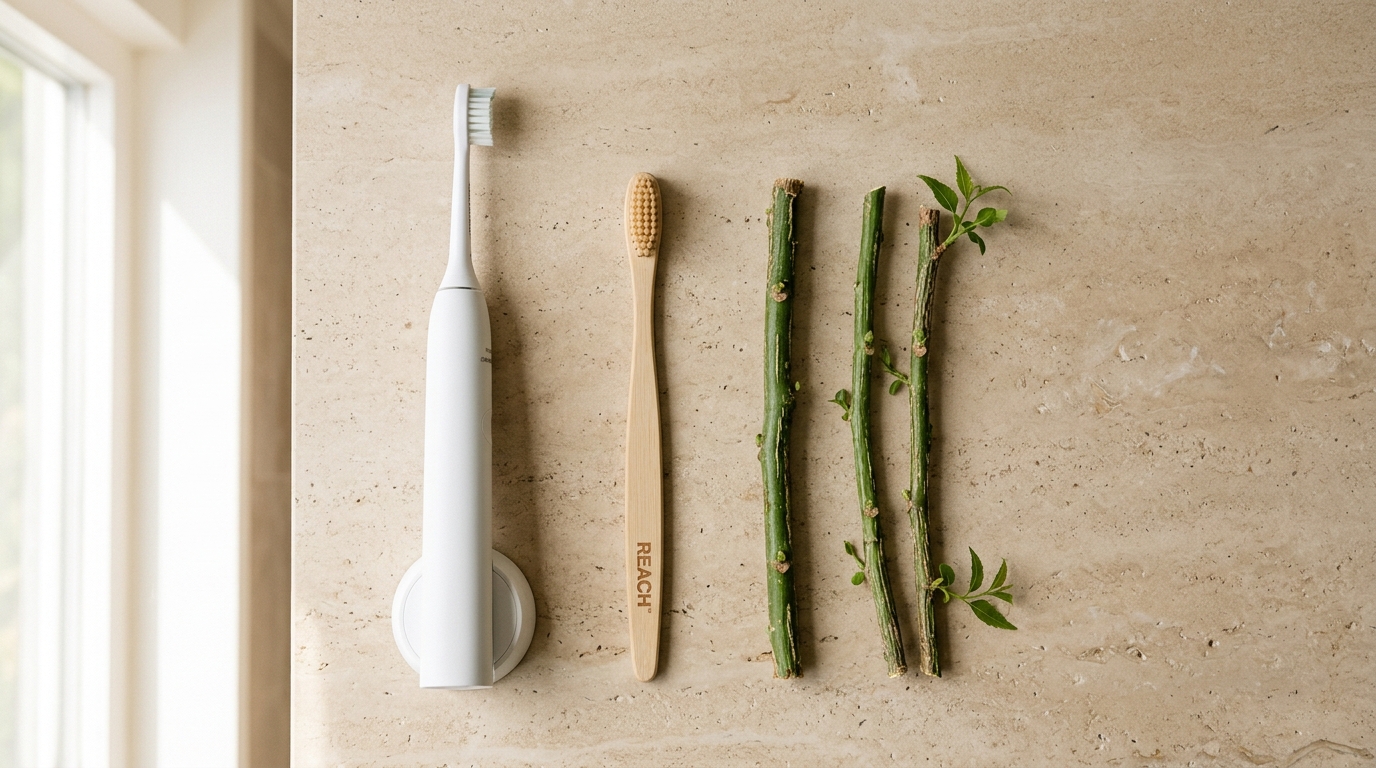
When it comes to maintaining pristine oral hygiene, we often find ourselves caught between age-old traditions, budget-friendly manual tools, and high-tech gadgets buzzing on bathroom countertops. For decades, the standard plastic toothbrush has been the undisputed champion of our morning routines. However, the market has seen a massive surge in electric toothbrushes promising superior plaque removal, automated timers, and advanced vibration modes.
To truly understand what belongs in your daily routine, we need to strip away the marketing hype and examine how different cleaning tools actually perform. From ancient neem datoon sticks rooted in South Asian heritage to cutting-edge sonic and oscillating electric toothbrushes, let’s explore the science, technique, and economics of modern dental care.
01. The Evolution of Oral Care: Datoon vs. Manual vs. Electric
Before electric motors and nylon bristles dominated supermarket aisles, oral hygiene relied heavily on natural resources. If you grew up in traditional households across South Asia, you likely remember or even practiced using datoon—fresh twigs harvested mostly from neem, babul, or peepal trees. The process requires peeling the bark to expose natural fibers that act as makeshift bristles, while releasing medicinal, bitter juices with antibacterial properties.
While datoon is practically free if you have access to the right trees, it comes with distinct limitations. Cleaning the inner surfaces of your molars is awkward, and you cannot easily regulate bristle softness. As society modernized, the manual plastic toothbrush took over due to convenience, low cost (typically ranging from ₹30 to ₹100), and widespread availability. You simply apply toothpaste and begin scrubbing.
Today, electric toothbrushes have shifted the paradigm, commanding anywhere from ₹500 to over ₹5,000. They introduce motorized automation into a task that most people rush through in under thirty seconds. But do these premium price tags translate to genuinely superior dental health, or is it just sophisticated marketing?
02. Understanding Plaque: What Are We Actually Cleaning?
To evaluate whether an electric toothbrush outperforms a manual brush or a natural twig, we first need to identify the enemy: dental plaque. Plaque is a sticky, colorless-to-pale-yellow bacterial film that continuously forms on your teeth. When you consume foods containing sugars and starches, the bacteria in plaque produce acids that attack tooth enamel and irritate gums.
If plaque is left unremoved, it hardens into calculus or tartar, which cannot be brushed away at home and requires professional dental scaling. Therefore, every single brushing session has one primary objective: disrupting and sweeping away this bacterial film from all accessible tooth surfaces before it mineralizes.
Most people assume that more force equals cleaner teeth. However, aggressive horizontal scrubbing with stiff bristles does not remove plaque faster; instead, it erodes tooth enamel and causes gum recession. This is where modern electric toothbrushes introduce a crucial mechanical advantage by automating the scrubbing action while regulating user pressure.
The Golden Rule of Brushing Time: Dental professionals universally recommend brushing for a full 2 minutes, twice daily. Clinical studies show that the average manual toothbrush user stops brushing in under 46 seconds.
03. The Manual Toothbrush: Cost-Effective & Equally Effective With Technique
Let’s address the elephant in the room: manual toothbrushes are extraordinarily affordable, highly portable, and require zero battery management. You can walk into any local pharmacy and purchase a reliable soft-bristled manual brush for pocket change. Furthermore, clinical research consistently demonstrates that a manual toothbrush is equally effective at removing plaque compared to an electric toothbrush—provided you execute the correct brushing technique.
The catch, of course, lies in that crucial caveat: proper technique. Most individuals never learned the modified Bass technique. We grab our brush, apply frantic horizontal pressure, neglect the inner surfaces of our lower teeth, and finish in a breathless 45 seconds. We also tend to hold onto manual brushes for far too long until the bristles splay outward like blooming flowers—a clear sign that cleaning efficiency has plummeted.
Pro Tip: The 3-Month Rule
Whether you use a manual toothbrush or replaceable electric heads, swap them out every 3 months. Worn-out bristles lose their structural integrity and fail to penetrate tight interdental spaces effectively.
If you are disciplined, use soft bristles, maintain a 45-degree angle to your gum line, and time yourself for two full minutes, a manual toothbrush will keep your smile sparkling without denting your wallet.
04. Electric Toothbrushes: Enforcing 2-Minute Timers & Gentle Pressure
If manual toothbrushes can achieve stellar results, why do electric toothbrushes enjoy such a massive cult following among urban professionals? The answer isn’t just raw cleaning power; it’s human psychology and automated habit-formation. Electric toothbrushes act as intelligent guardrails against common brushing errors.
First, built-in interval timers solve the time-tracking problem. Quality electric toothbrushes feature a pacer that pauses every 30 seconds, signaling you to move from one quadrant of your mouth to the next, and automatically shuts off at the two-minute mark. This eliminates guesswork and ensures every tooth receives equal attention.
Second, advanced electric brushes feature pressure sensors. If you press too hard against your enamel—a common habit carried over from manual scrubbing—the brush will either reduce its motor speed or flash a warning light (such as a red LED), training you to adopt a feather-light touch.
Finally, electric toothbrushes dramatically lower the cognitive friction of brushing. You don’t need to master complex wrist flicks; you simply guide the vibrating or rotating head along your dental arch, letting the motor handle the mechanical plaque disruption.
05. Sonic vs. Oscillating Electric Toothbrushes: Which Tech Wins?
When you venture into the electric toothbrush market, you will quickly encounter a technical divide between two primary motor technologies: Sonic and Oscillating-Rotating.
Sonic toothbrushes (such as the Oracura SB300) operate at extremely high frequencies, vibrating rapidly at upwards of 30,000 to 40,000 strokes per minute. This high-speed lateral vibration creates dynamic fluid action, forcing saliva and toothpaste slurry deep into interdental spaces and hard-to-reach pockets where bristles cannot easily physically penetrate. They offer a gentler, buzzing sensation that many users find comfortable.
Oscillating-rotating toothbrushes (such as the Oral-B iO series) take a more mechanical approach. Their round brush heads physically rotate back and forth while pulsating against the tooth surface. This scrubbing and sweeping action directly targets surface stains and heavy plaque deposits with mechanical friction. They feel more robust and produce a deeper polishing effect, though some users with sensitive gums require a brief adjustment period.
Neither technology is objectively superior for everyone; sonic brushes excel at fluid dynamics and gentle gum care, while oscillating brushes provide aggressive mechanical plaque scrubbing.
06. Common Brushing Mistakes and How to Fix Them
Regardless of whether you choose a traditional twig, a manual brush, or a high-end sonic gadget, certain universal pitfalls undermine oral health. Recognizing these mistakes is the first step toward correcting your daily routine.
1. Brushing Immediately After Acidic Meals: Drinking citrus juices, coffee, or wine softens your tooth enamel temporarily. Brushing right away scrubs away micro-layers of softened enamel. Instead, rinse your mouth with plain water and wait 30 minutes before brushing.
2. Ignoring the Tongue and Gum Line: Bacteria doesn’t just rest on hard tooth surfaces; it blankets your tongue and accumulates along the gingival margin. Always tilt your bristles at a 45-degree angle toward the gums and gently sweep across your tongue.
3. Choosing Hard Bristles: Many consumers mistakenly believe that firm bristles clean better. In reality, hard bristles cause gum recession and cervical abrasion over time. Always select soft or ultra-soft bristles.
07. Frequently Asked Questions (FAQ)
Do electric toothbrushes whiten teeth?
Electric toothbrushes do not contain bleaching chemicals, but their superior plaque and surface stain removal can restore your teeth to their natural shade, making them look noticeably brighter and cleaner than manual brushing.
Are replacement brush heads too expensive?
While electric toothbrush replacement heads cost more than a standard manual brush, buying multipacks or compatible third-party heads significantly reduces the long-term cost.
Can children use electric toothbrushes?
Yes, many brands offer smaller children’s electric toothbrushes with built-in musical timers that make building healthy brushing habits fun and engaging from an early age.
Is neem datoon safe for daily use?
Neem datoon has natural antibacterial benefits, but excessive scrubbing with raw twigs can damage gums. It is best used as a cultural supplement rather than a complete replacement for modern dental hygiene practices.
Curated Dental Care Recommendations
Moisturizing Cream with 3 Essential Ceramides
Skin Relief Moisturizing Lotion with Colloidal Oat
1% Hyaluronic Sunscreen Aqua Gel SPF 50 PA++++
Philips All-in-One Trimmer Series 3000 (MG3927)
Affiliate Disclosure: Some links in this article are affiliate links. If you purchase through them, FetchUp may earn a small commission at no extra cost to you.
Dental Safety Note & Further Reading
Informational Note: Brushing technique, soft bristles, and twice-daily fluoride use matter more for plaque control than toothbrush price. Always consult a qualified dentist if you experience persistent gum bleeding or tooth sensitivity.
- Related on FetchUp: Simple Daily Men’s Skincare Routine • Simple Hair Care Routine for Men